
Article: How to Choose Large Textured Wall Art for Your Living Room

How to Choose Large Textured Wall Art for Your Living Room
A living room usually comes together in layers: the sofa, the rug, the light, and then the one piece that makes the room feel finished. Large textured wall art often becomes that piece. Its scale commands the wall, its surface catches the light, and its handmade character keeps the room from looking showroom-perfect in the best possible way. Choosing well is less about following a formula and more about matching size, color, and texture to the life that happens in the room.
Why Large Textured Wall Art Works in Modern Interiors
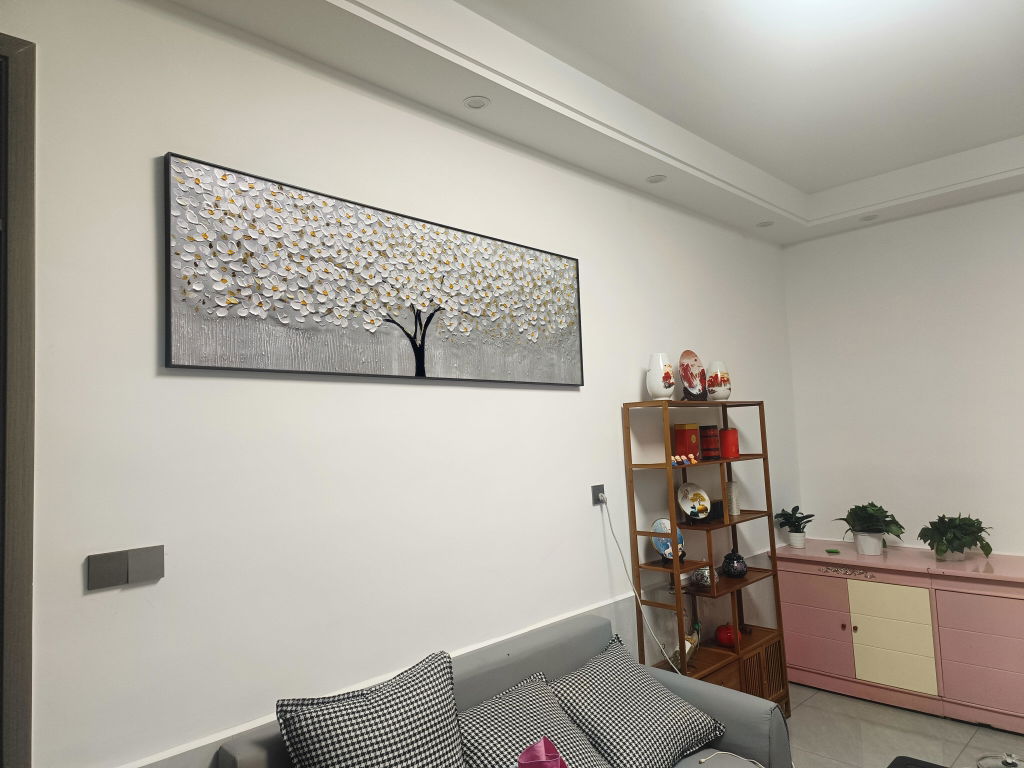
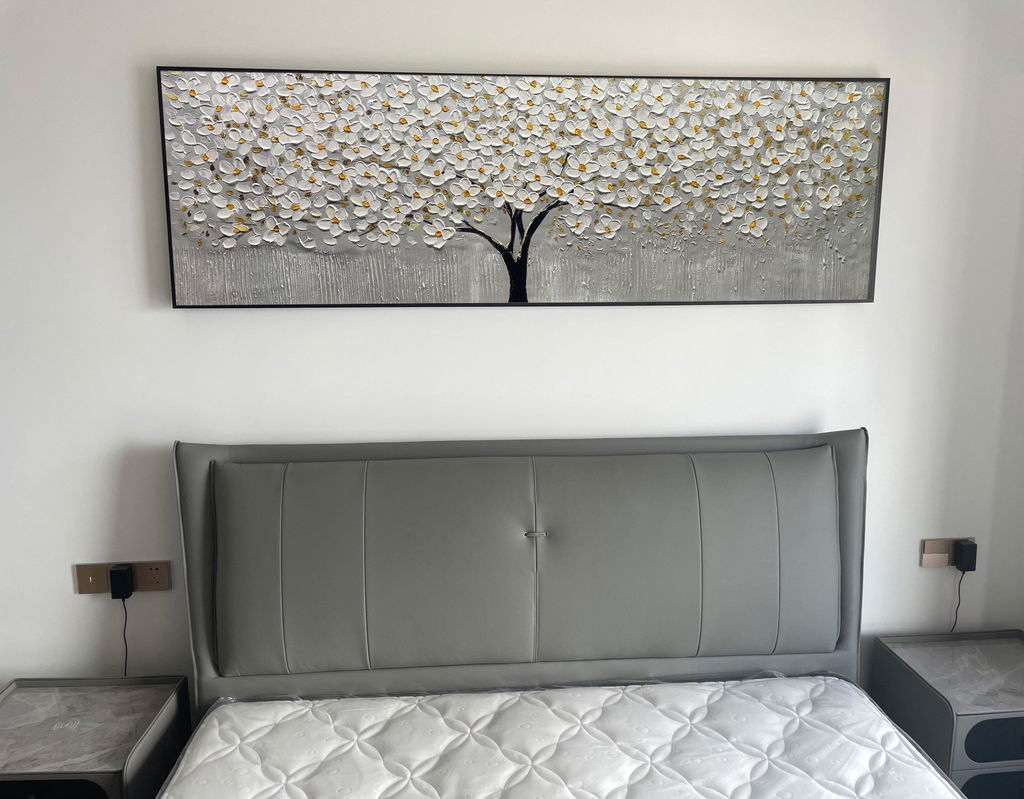
Modern interiors rely on clean lines, but they can feel flat without something tactile to balance them. A large textured painting introduces depth that a flat print cannot replicate. Thick impasto, palette-knife ridges, and plaster-like relief create small shadows across the surface, so the artwork changes through the day instead of staying visually static.
That changeability is the quiet advantage of hand painted textured wall art. In morning light the ridges may read soft and chalky; by evening, a side lamp can make the same strokes look sculptural. An original piece also carries small variations in brushwork and edge control that make it uniquely yours. A printed reproduction can copy an image, but it cannot reproduce the way paint sits on canvas.
Choose the Right Artwork Size for Your Wall
Scale is the first decision, and it is usually the one people get wrong. Artwork that is too small leaves a large wall looking unresolved, while a piece that is too large can crowd the furniture beneath it.
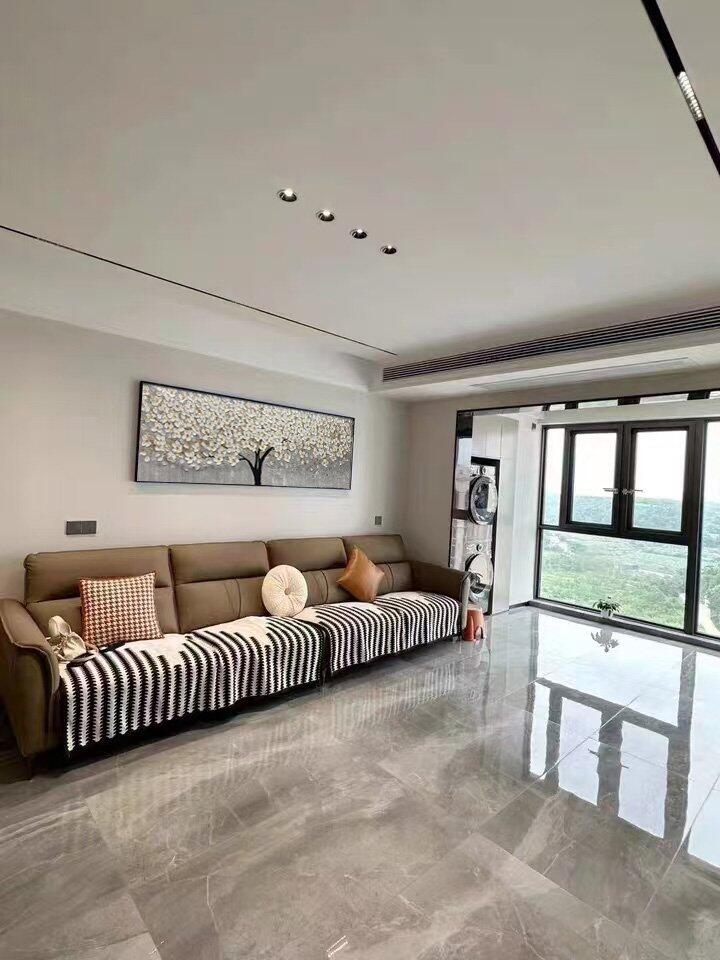
Above a sofa, a useful guideline is to choose artwork roughly 60–75% of the sofa's width. A 90-inch sofa, for example, sits comfortably under a painting around 54–68 inches wide. Treat this as a design guideline rather than a strict rule, especially if the artwork will hang alongside shelves or a window.
For a large blank living room wall, aim for a piece that occupies about two-thirds of the available width, or group smaller works into a considered arrangement. Narrow walls generally suit vertical compositions, while wide walls benefit from horizontal or panoramic formats. Oversized canvas wall art can anchor a room on its own, but it needs breathing space: leave at least 8–10 inches between the bottom of the frame and the top of the sofa, and keep the center of the artwork near eye level.
Popular statement sizes include 48 × 36 inches for a substantial horizontal piece, 60 × 40 inches for a broader wall, and 32 × 64 inches for a tall, dramatic format. Many RIDYART paintings are available in a wide range of sizes, so you can scale the composition to the wall rather than settling for the closest standard option.
Match Textures and Colors to Your Interior
Color draws the eye, but texture decides how the color feels. A neutral textured wall art piece in ivory, cream, or beige keeps a minimalist room calm while adding subtle movement. These tones work especially well with linen sofas, pale oak, bouclé, and rooms that rely on daylight rather than strong artificial lighting.
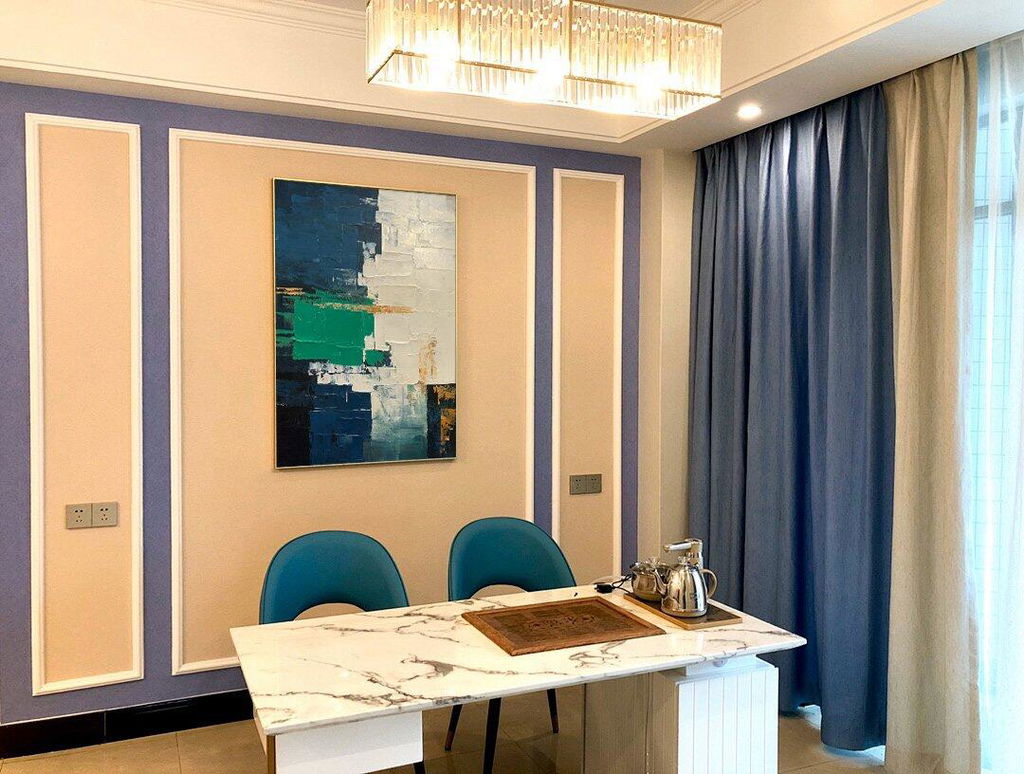
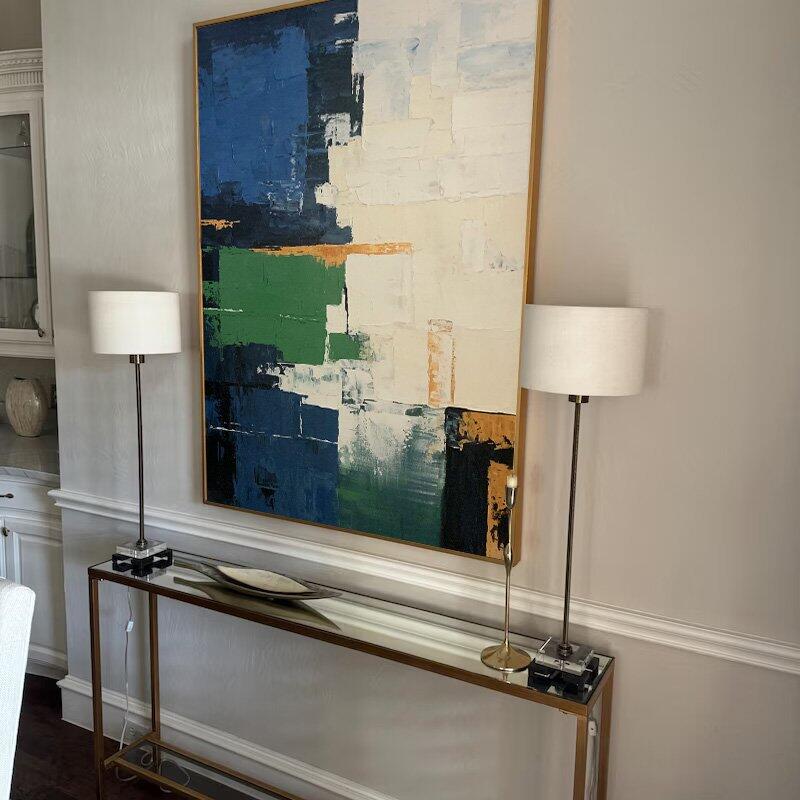
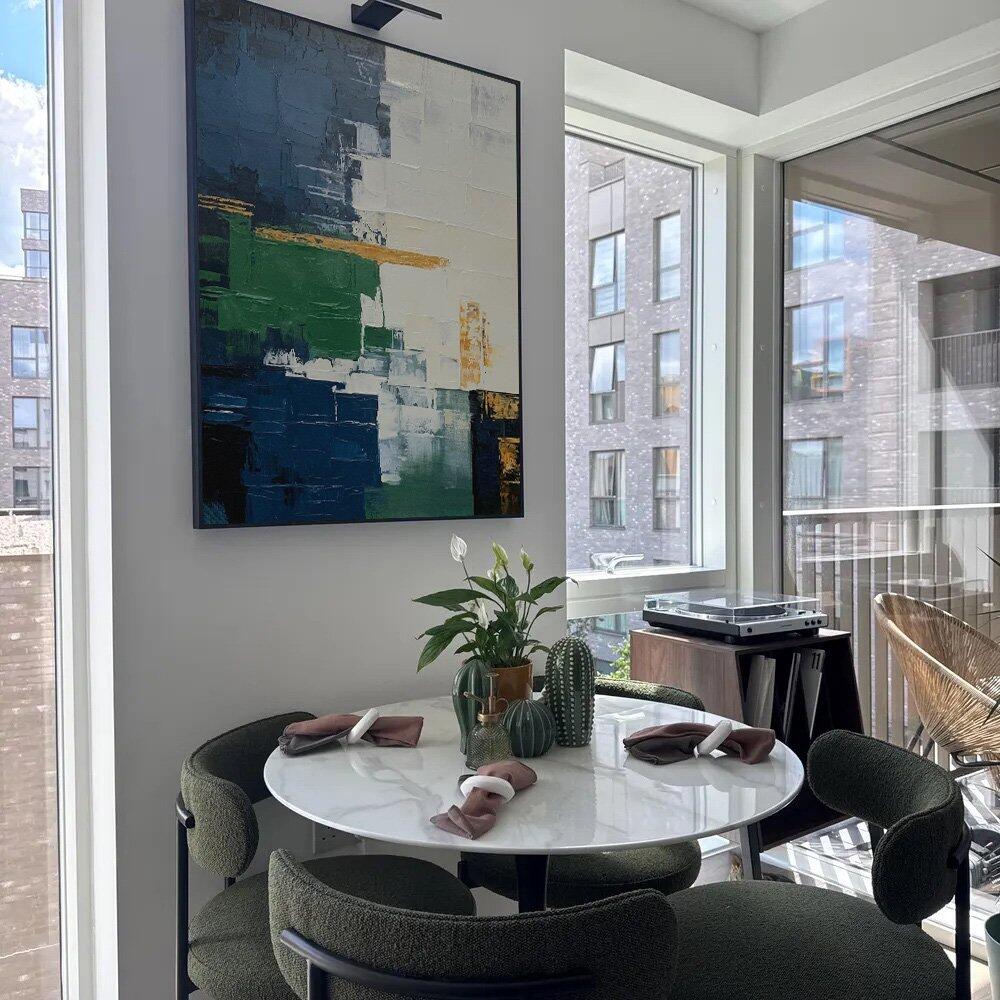
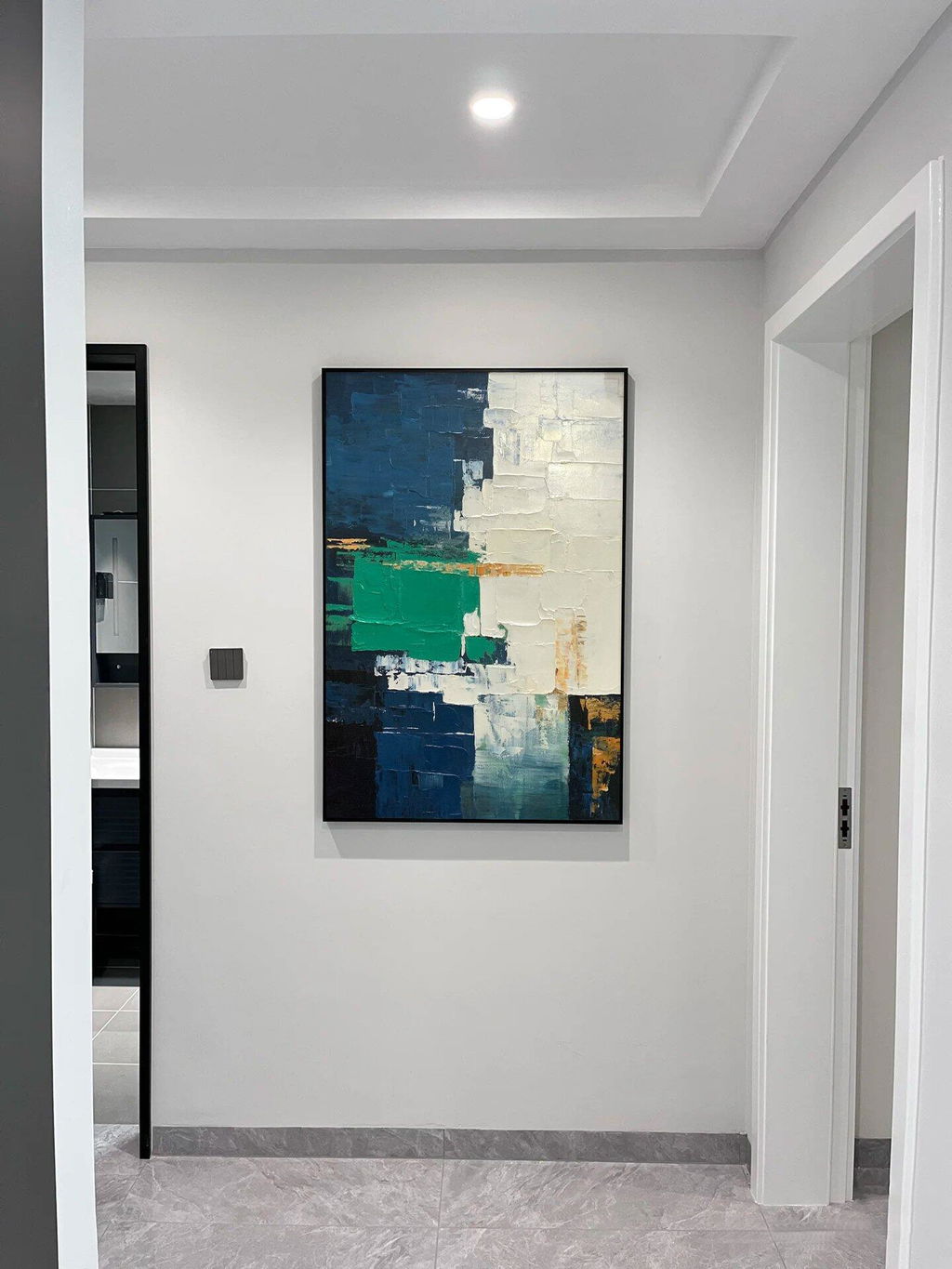
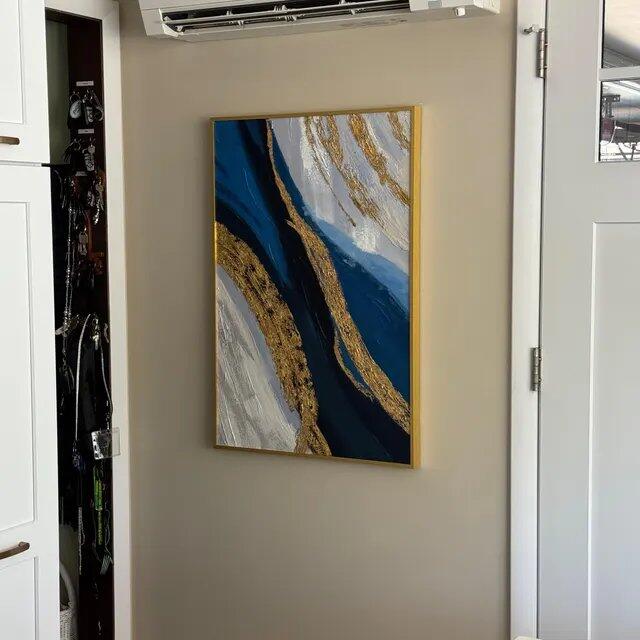
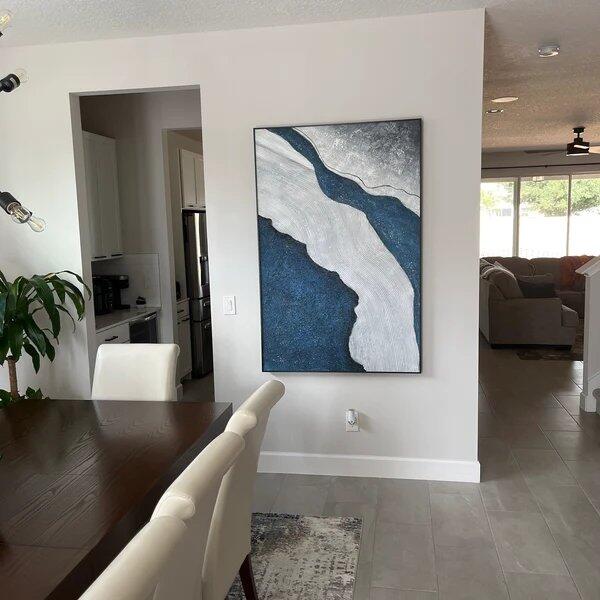
Sage green brings an organic, grounded quality to modern textured paintings. It suits Japandi and nature-inspired interiors, particularly when paired with warm wood, stone, and off-white walls. Navy blue and ocean tones create a more deliberate accent; they give a light room depth and pair naturally with brass, walnut, and crisp white trim. Gold details add warmth without demanding attention, especially in pieces where metallic accents catch the light at an angle.
When combining colors, let the artwork lead: keep the surrounding palette quiet, and repeat one shade in a cushion or ceramic rather than matching everything exactly.

Four Hand-Painted Artworks to Inspire Your Space
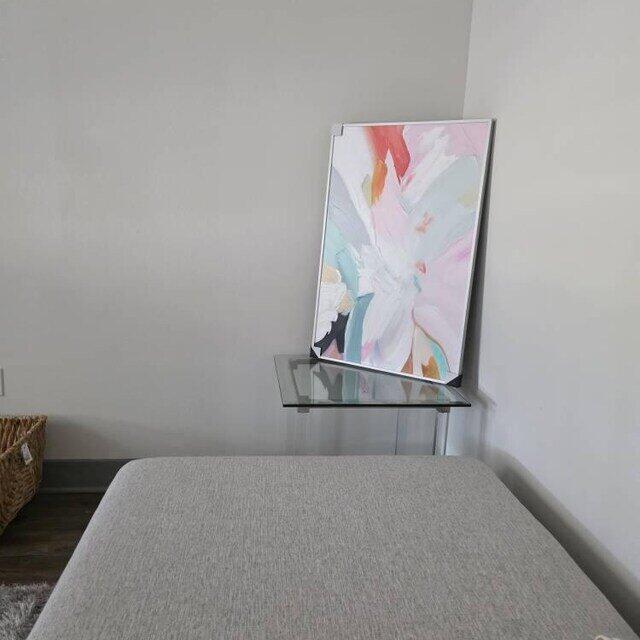
These four pieces show how different textures can change the mood of a living room, from quiet minimalism to a deeper, more dramatic accent.
White Textured Minimalist Wall Art
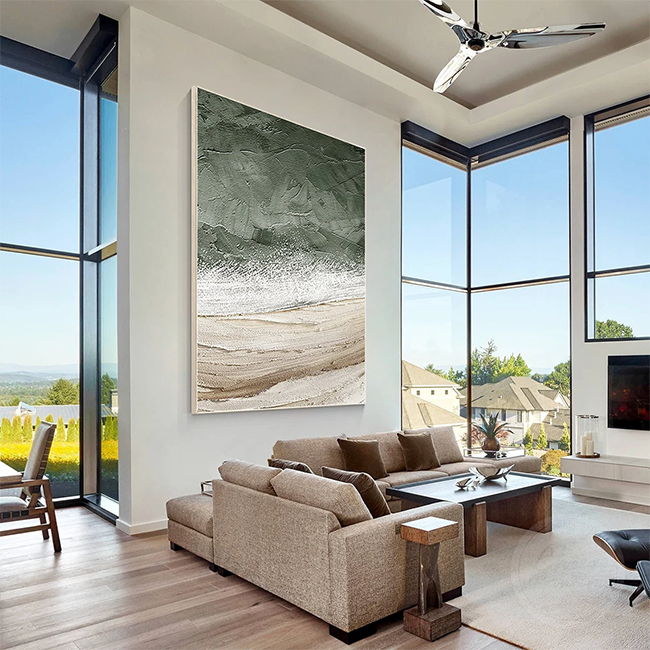
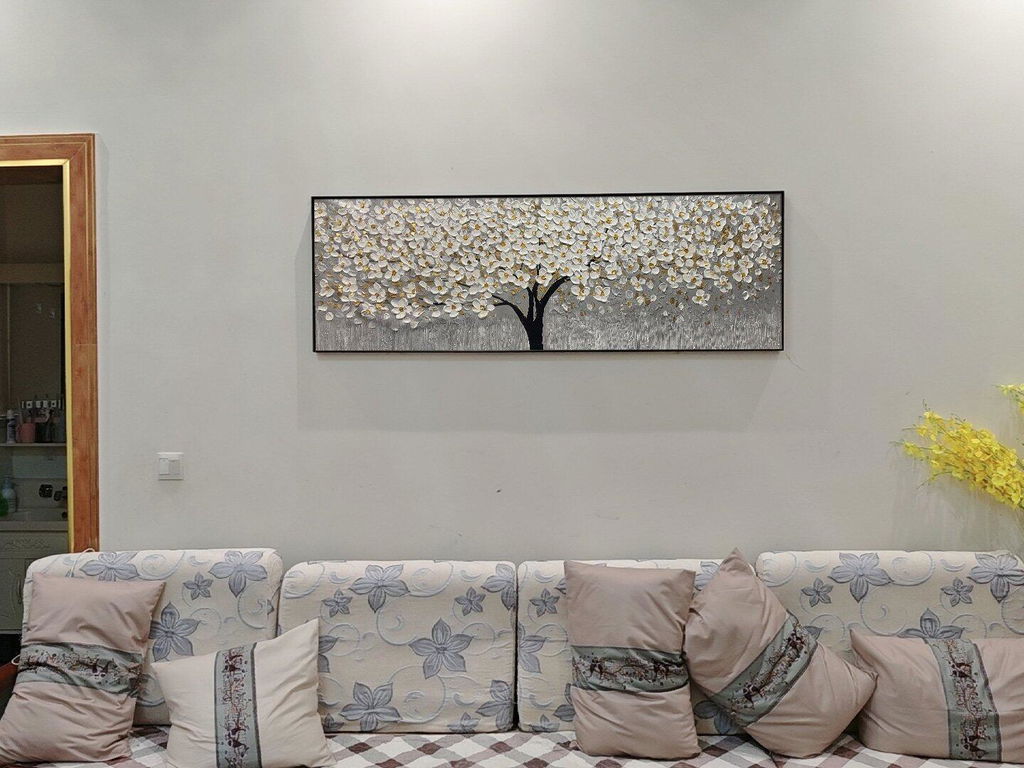
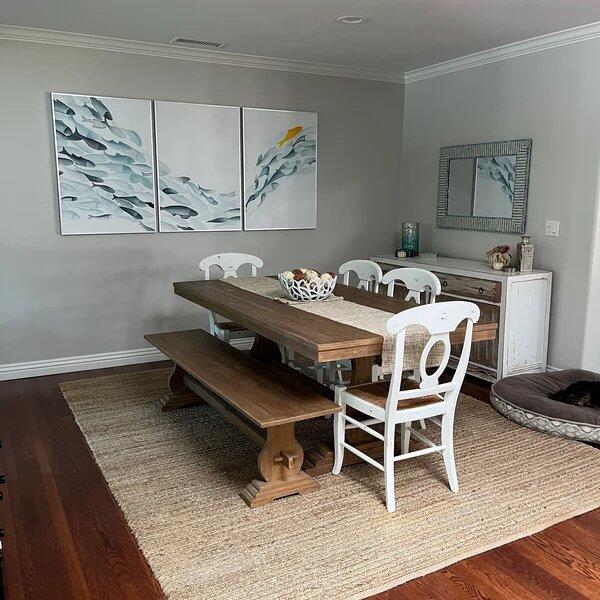
This piece is built around soft, wave-like ridges in thick impasto, with an off-white palette that stays calm even as the surface shifts in the light. It suits minimalist and contemporary rooms, especially spaces with cream walls, pale wood, and natural fabrics. It is an easy way to bring presence above a sofa without adding a strong color.
Navy Blue Textured Abstract Painting
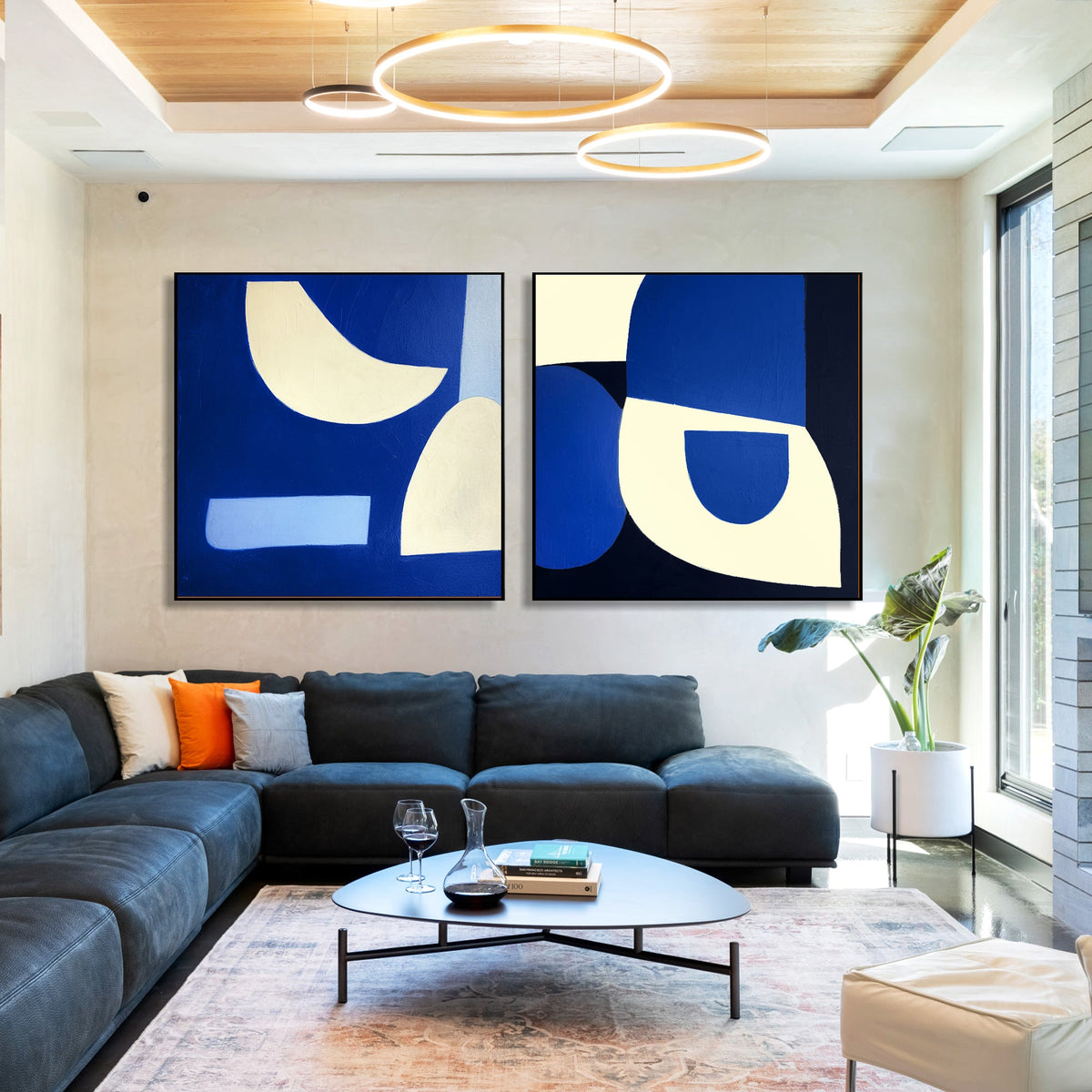
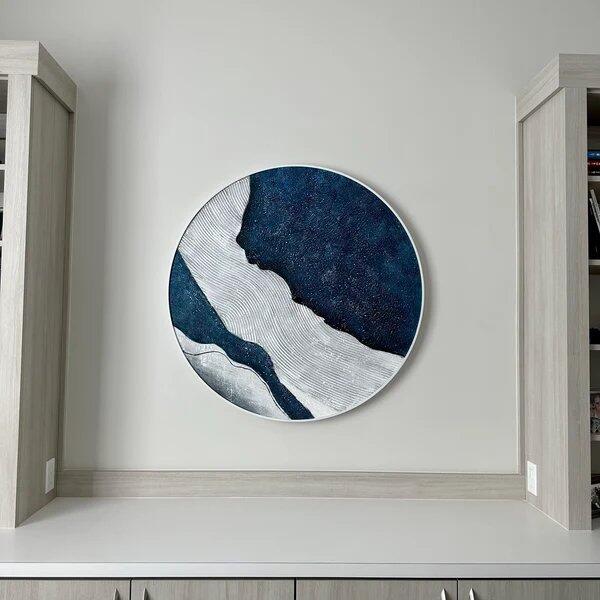
A navy Enso circle sits at the center of a pale, plaster-like surface scattered with raised white texture. The contrast gives this square painting a meditative, contemporary feel. It works with white walls, dark wood, or brass accents, and suits a wall above a console or a symmetrical seating arrangement.

View the Navy Blue Textured Abstract Painting, or browse 3D textured paintings for similar surfaces.
Sage Green Vertical Large Abstract Painting
Deep forest green, soft sage, and cream meet in broad palette-knife strokes, creating a surface that looks almost geological. The vertical composition suits a tall living room wall, and the green palette brings an organic-modern interior together. Choose it for color that feels grounded rather than bright.

Learn more about this sage green vertical abstract painting, or explore the large abstract wall art collection.
How Lighting Changes the Look of Textured Paintings
Texture is a collaboration between paint and light. In a room with strong natural daylight, raised brushwork casts crisp little shadows that make the surface feel energetic. In softer, diffused light, the same painting reads quieter and more tonal.
Side lighting is usually the most flattering for 3D textured wall art because it rakes across the ridges instead of flattening them. A floor lamp beside the artwork, or a picture light mounted slightly above it, can bring out depth in the evening. Avoid hanging it opposite a window with direct glare, which flattens the surface; in strong afternoon sun, matte finishes and adjustable shading help.
Choosing Between Rolled Canvas, Gallery Wrap, and Framed Artwork
Most RIDYART paintings are offered in several presentation options, and the right one depends on how much finishing work you want to handle locally.
Rolled canvas arrives unstretched and is the most economical choice. It suits collectors and designers who already work with a local framer, or anyone planning a bespoke frame.
Gallery wrap means the canvas is stretched over a wooden frame with the sides finished, so the artwork arrives ready to hang. It gives a clean, contemporary look and works particularly well for large abstract pieces where a frame would add unnecessary visual weight.
Framed artwork is professionally finished with an outer frame and is ready to display. A slim black, white, or wood frame can sharpen a minimalist composition, while gold or silver can echo metallic details in the painting. Availability varies by product, so confirm the specific finish on the product page before ordering.
Why Original Hand-Painted Art Makes a Difference
RIDYART focuses on handmade canvas artwork rather than mass-produced printed reproductions. That matters most when you look at the surface up close: brush marks, palette-knife edges, and slight changes in density are part of the piece, not flaws to be smoothed away.






Leave a comment
This site is protected by hCaptcha and the hCaptcha Privacy Policy and Terms of Service apply.