

Why Modern Homes Feel Exhausting — And How Art Helps
The Hidden Problem in Many Modern Interiors
Many homes today look beautifully designed at first glance.
The furniture is modern, the colors are coordinated, and the layout follows current interior trends. Yet despite all of this, some spaces still feel mentally tiring to spend time in.
The issue often isn’t clutter in the traditional sense. In fact, many interiors today are visually “clean.” The real problem is something less obvious: visual tension.
Too many sharp lines, hard surfaces, disconnected objects, and flat empty walls can create a space that feels emotionally cold or overstimulating without people fully realizing why.
A home should not only look good—it should also allow the mind to slow down.
This is where wall art becomes more important than most people think.
What Is “Visual Breathing Space”?
Visual breathing space is the feeling of balance and calm within an interior.
Just as silence gives music rhythm, thoughtful visual pauses help a room feel more comfortable and complete.
Without this balance, a room may feel:
- unfinished
- emotionally flat
- overly sharp
- visually tiring
Well-chosen artwork helps soften these effects by creating flow, depth, and rhythm throughout the space.
Rather than simply filling an empty wall, the right piece guides how the eye moves through a room.

Why Textured Artwork Changes the Feeling of a Room
One reason printed artwork often feels less satisfying over time is that it remains visually static.
The surface is flat.
The lighting rarely changes its appearance.
The eye absorbs it quickly and moves on.
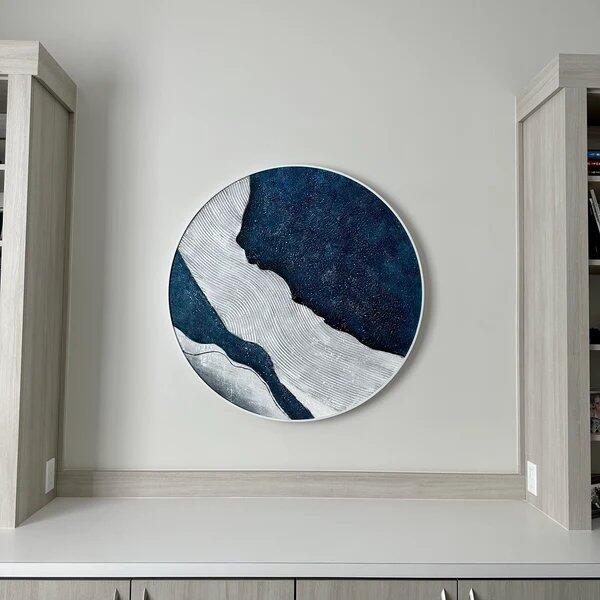
Textured hand-painted artwork creates a completely different experience.
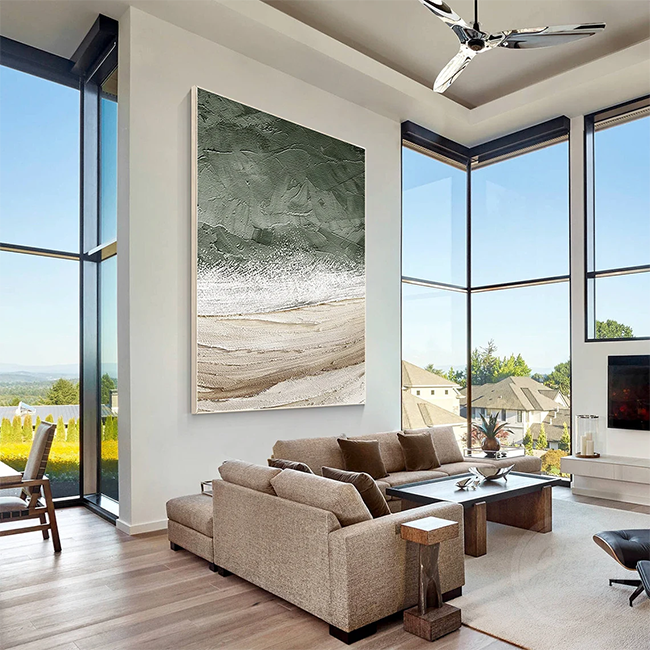
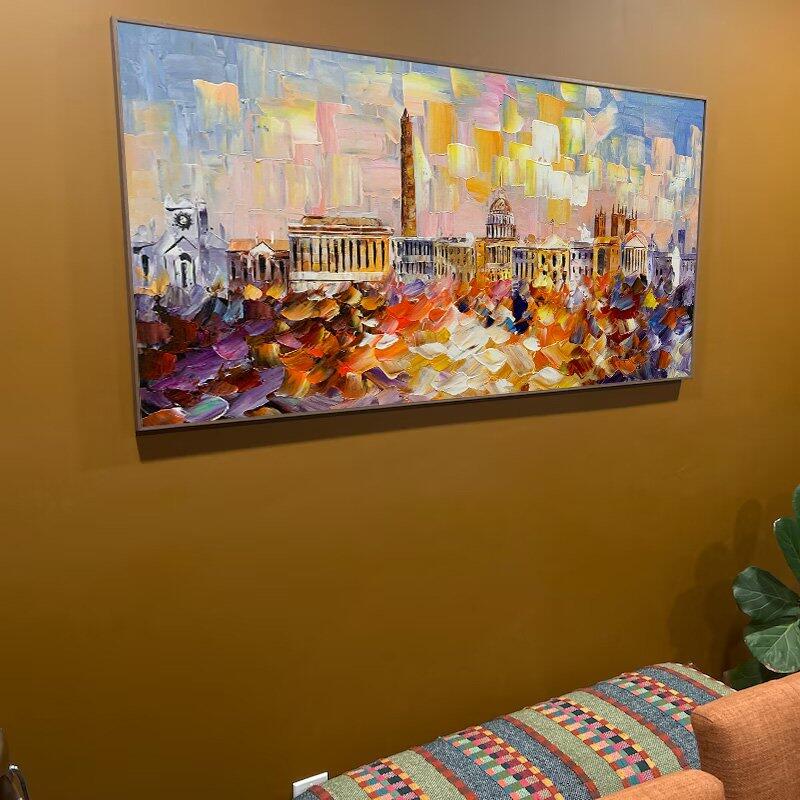
Layered acrylic paint, palette knife details, and visible brushstrokes interact naturally with light throughout the day. Shadows shift subtly across the surface, allowing the artwork to feel more alive and dimensional.
This creates a quieter kind of visual engagement—one that adds interest without overwhelming the room.
In many modern interiors, texture acts almost like a visual “softener,” helping spaces feel warmer and more grounded.

Why Oversized Artwork Often Feels More Relaxing
Interestingly, one large artwork often creates more calm than several small pieces.
Small frames scattered across a wall can divide attention and create visual fragmentation. The eye jumps from object to object without resting.
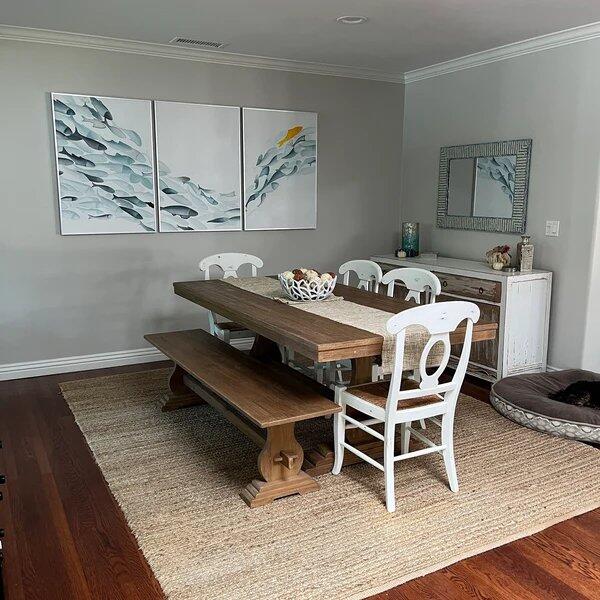
A larger painting or triptych composition creates a stronger visual anchor.
Instead of visual interruption, the room gains:
- structure
- continuity
- balance
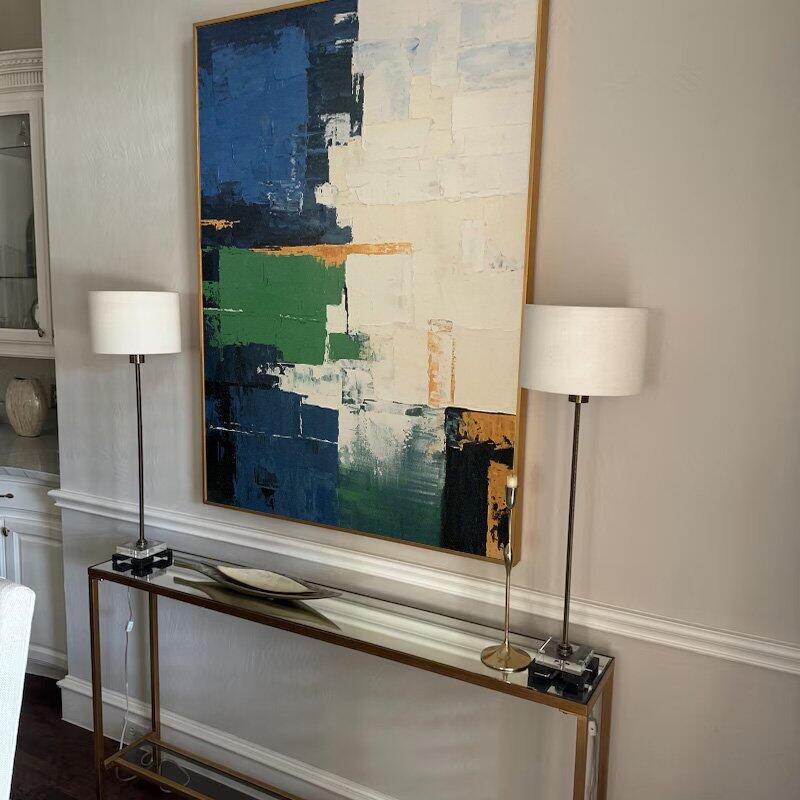
This is why oversized textured wall art works especially well in modern homes with open layouts and minimal furniture.
It gives the space presence without adding clutter.

The Role of Color in Visual Calm
Color affects emotional atmosphere more than people realize.
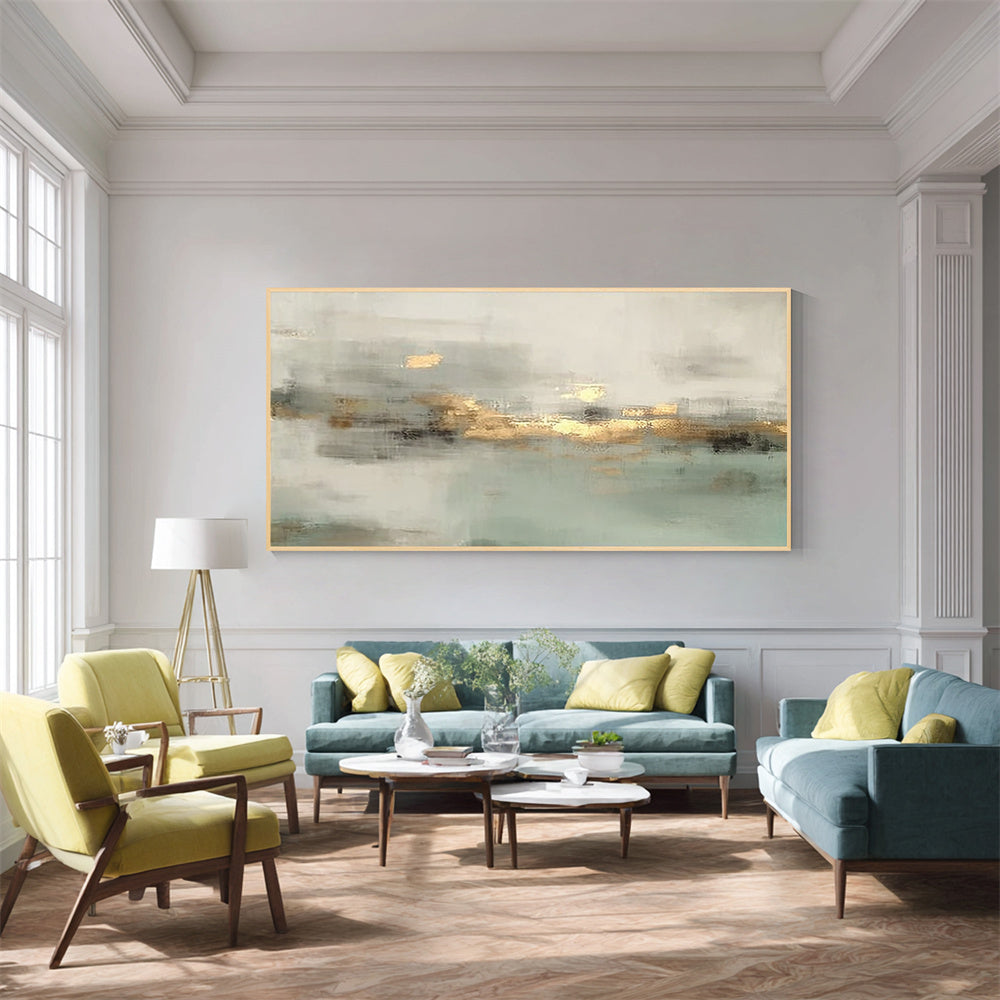
Soft neutrals, muted earth tones, and layered whites tend to create a slower and more relaxed visual rhythm.
Meanwhile:
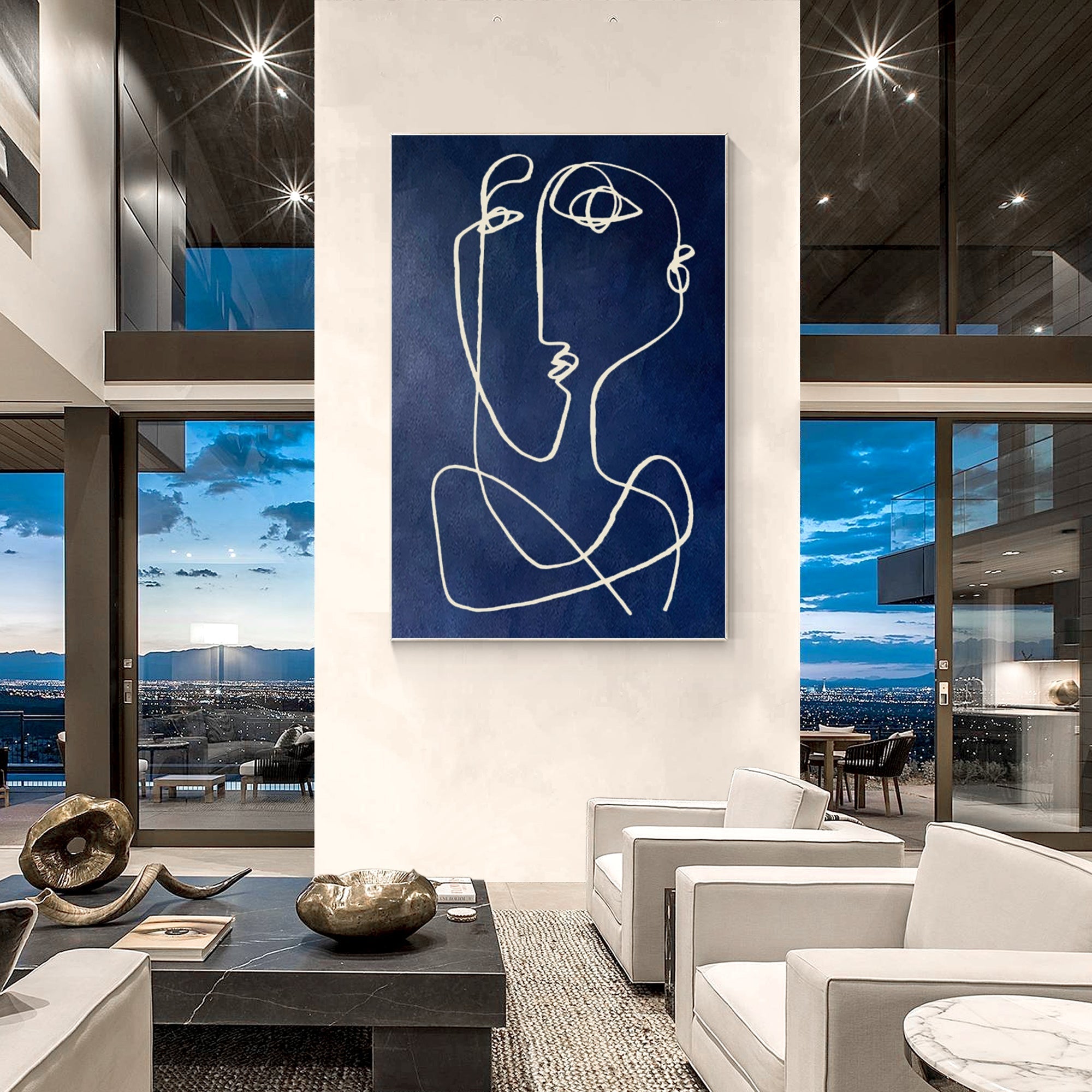
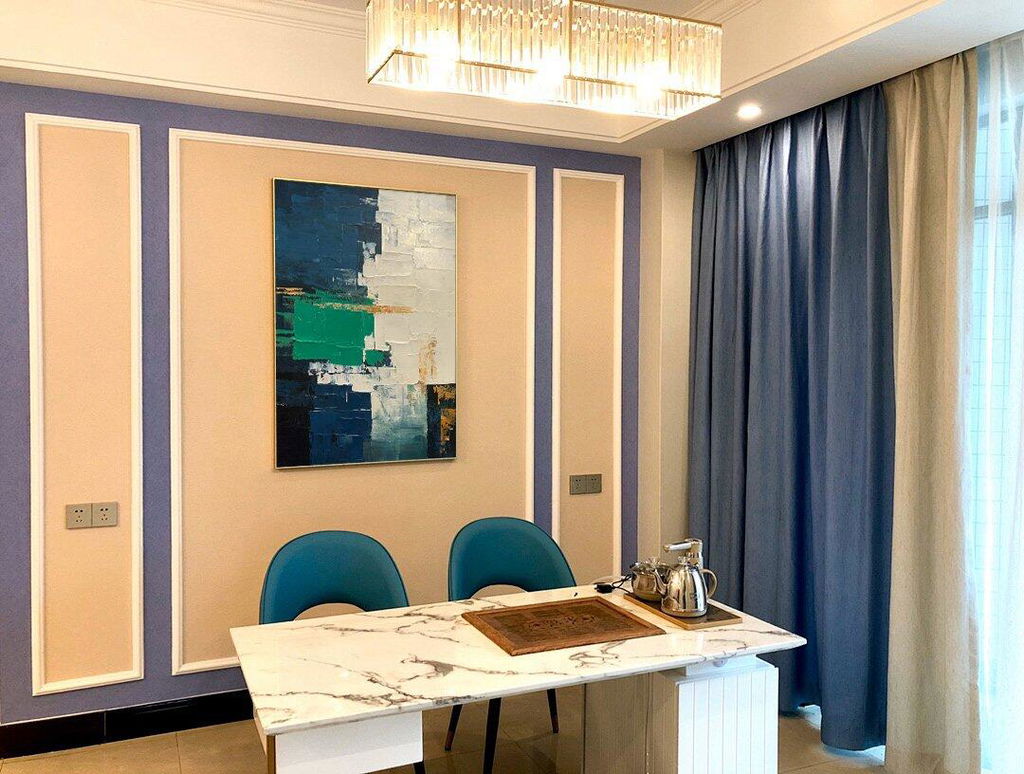
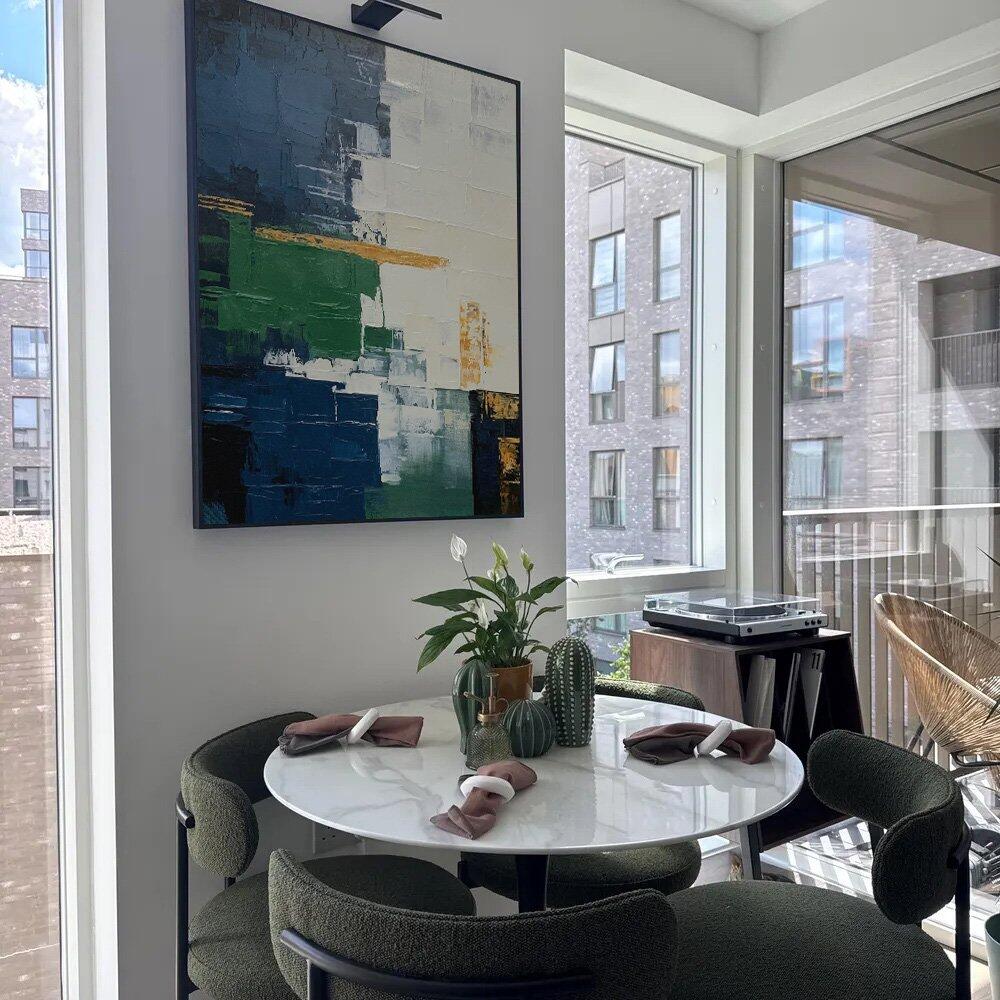
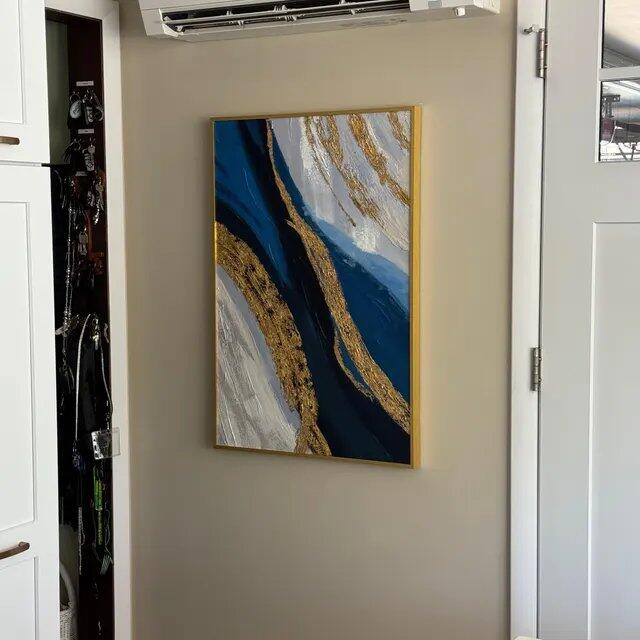
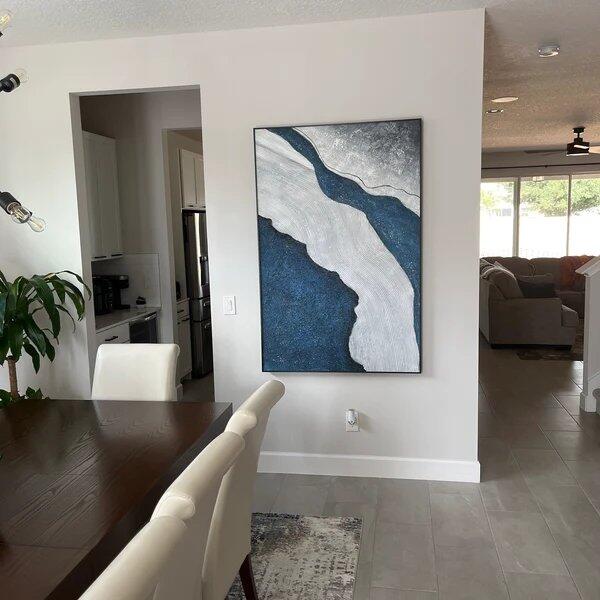
- deep blues create quiet depth
- sage and olive tones introduce a natural feeling
- warm beige tones soften hard architectural lines
When combined with texture, these colors become even more effective because the surface catches light differently across the painting.
The result feels more organic and less flat.

How Different Spaces Benefit from Visual Breathing Space
Living Room
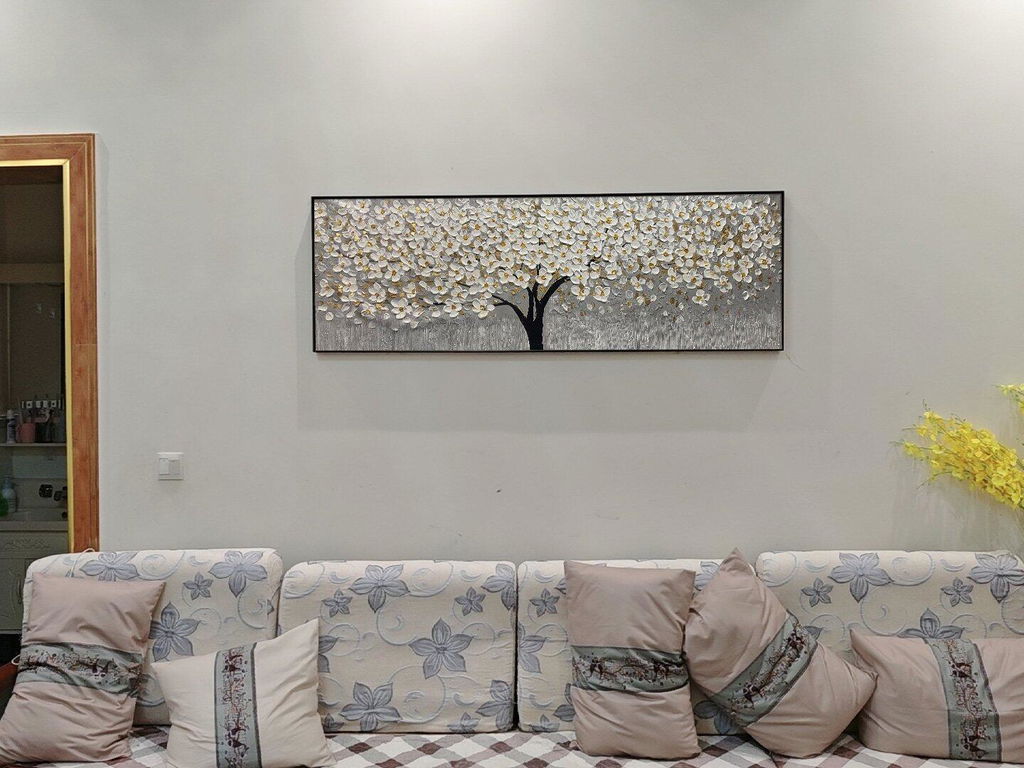
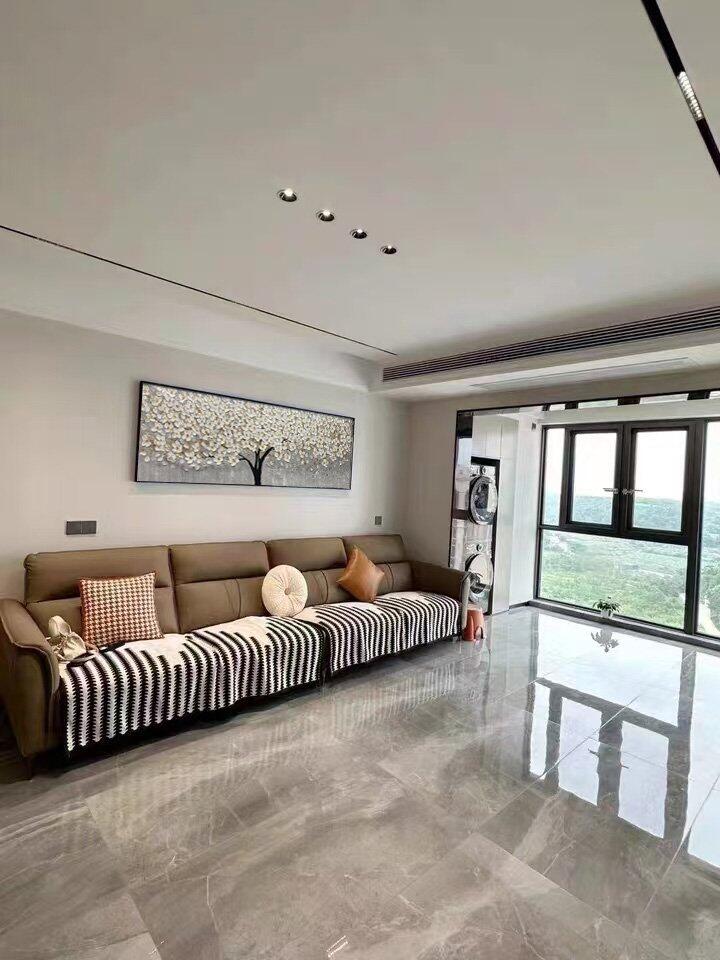
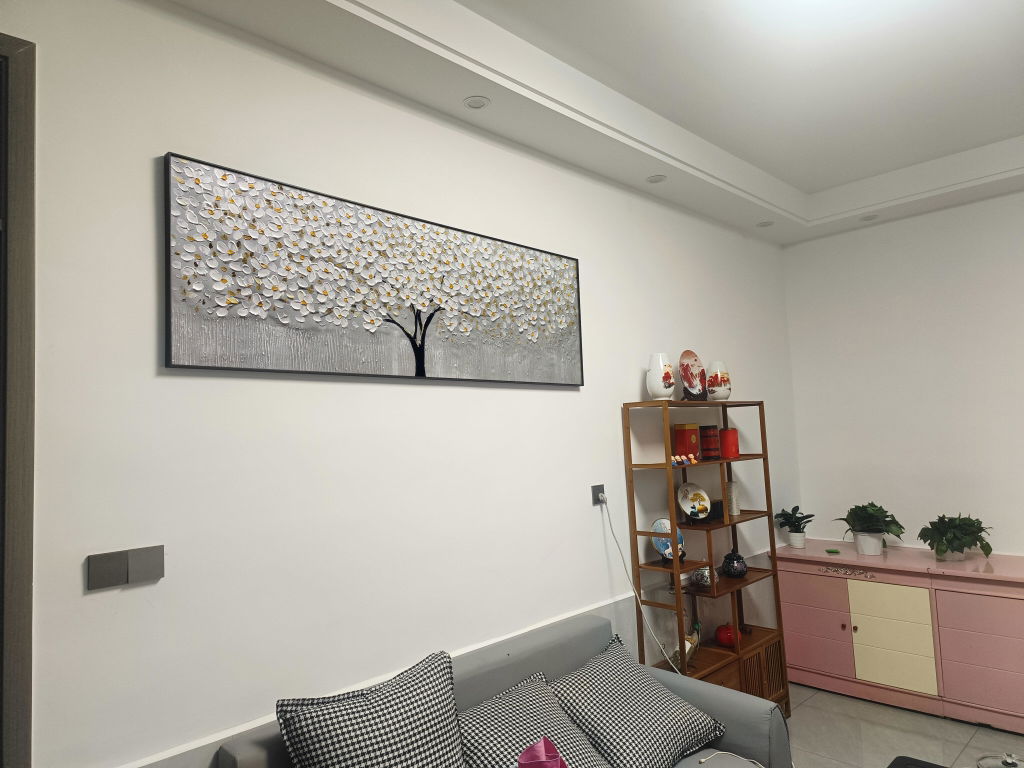
In living rooms, large textured artwork helps anchor open walls and soften the contrast between furniture and architecture.
Neutral abstract paintings work particularly well because they add depth without making the room feel crowded.
Bedroom
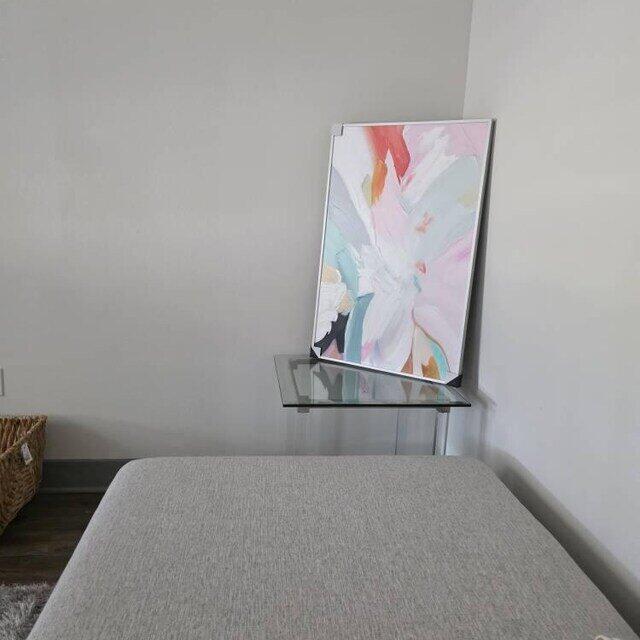
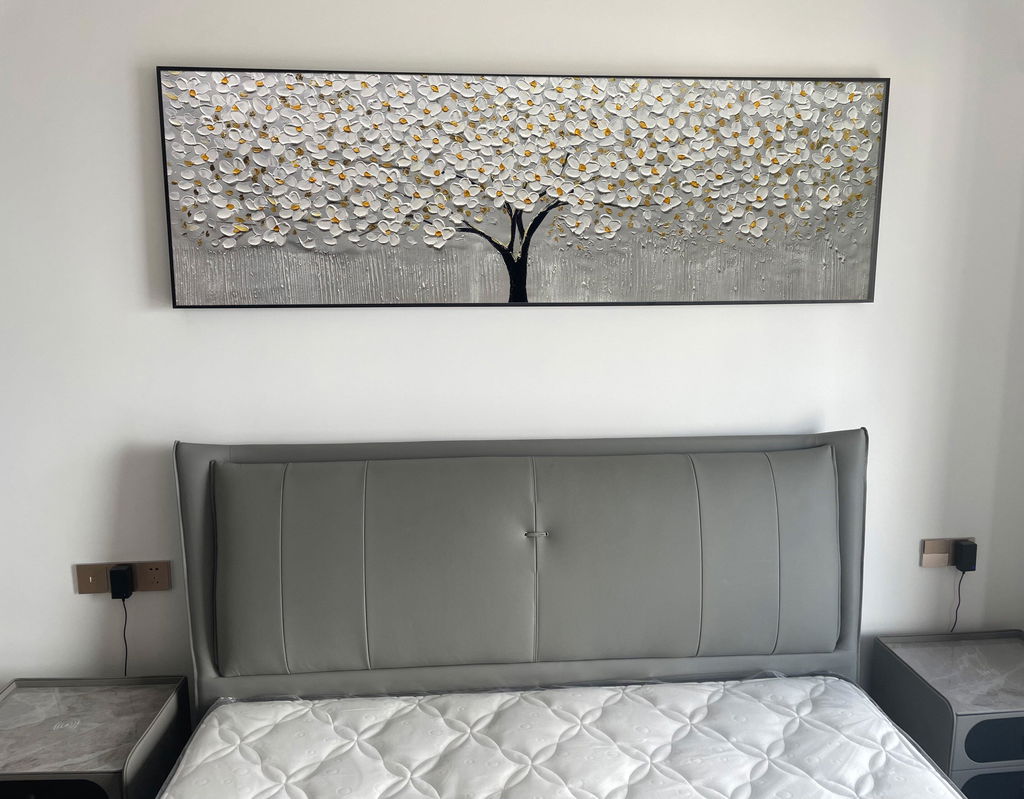
Bedrooms benefit from softer compositions and layered textures.
Artwork with gentle movement and low-contrast colors can help create a more restful environment, especially above the bed.
Hallways
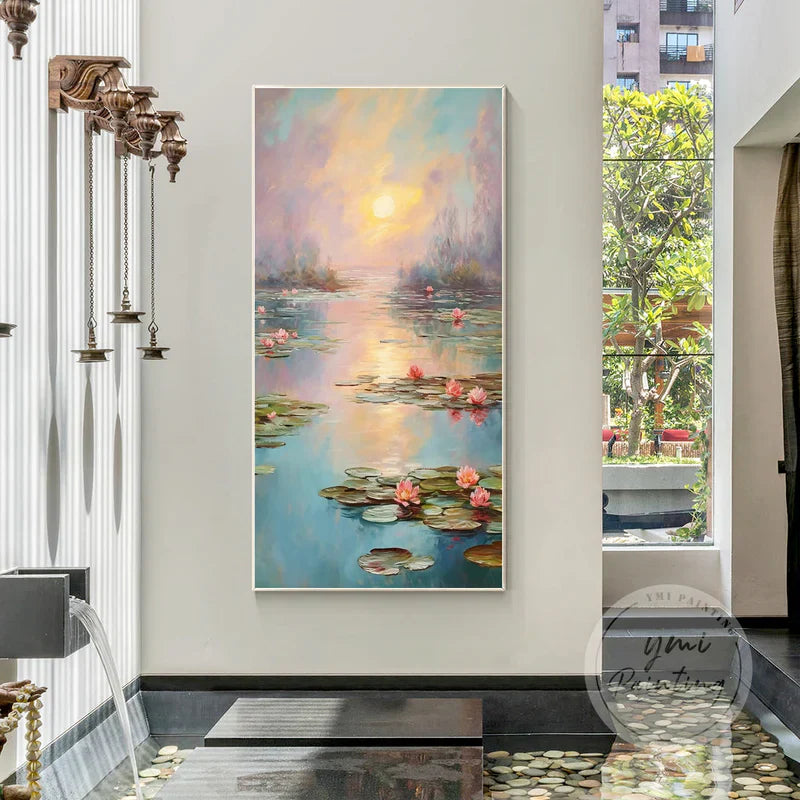
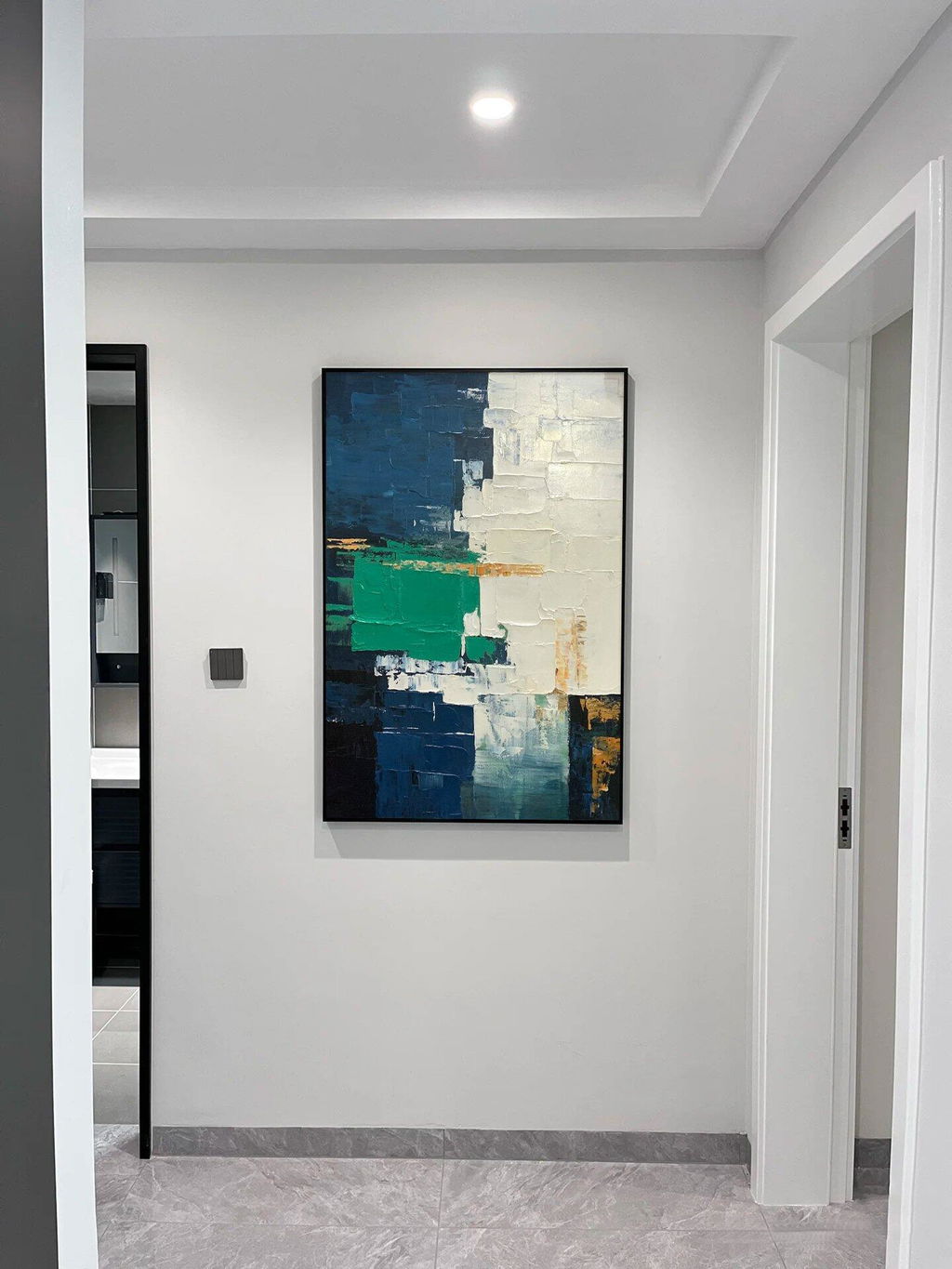
Hallways are often overlooked, yet they strongly influence how a home feels overall.
Textured artwork can help transitional spaces feel more intentional and less empty.
Home Office
A workspace should feel focused, but not emotionally cold.
Artwork with subtle texture and calm color palettes can reduce visual harshness while still maintaining clarity and structure.

Final Thought — A Home Should Feel Calm, Not Just Stylish
Good interior design is not only about aesthetics.
It’s also about how a space affects your mood, focus, and emotional comfort.
The right artwork creates more than decoration. It creates atmosphere.
Sometimes, what a room needs isn’t more furniture or more objects.
It simply needs a sense of visual breathing space.






Leave a comment
This site is protected by hCaptcha and the hCaptcha Privacy Policy and Terms of Service apply.